How To Make Hard Cider
Hard Cider Recipe
- Clean and sanitize your fermentation vessel, and airlock and a rubber stopper
- Rinse thoroughly with warm water.
- Add 1/2 tsp StarSan to 1 cup water and pour in your fermenter, fasten lid and insert stopper and airlock. Shake then drain through the spigot. Some suds may remain—this is ok. Do not rinse!
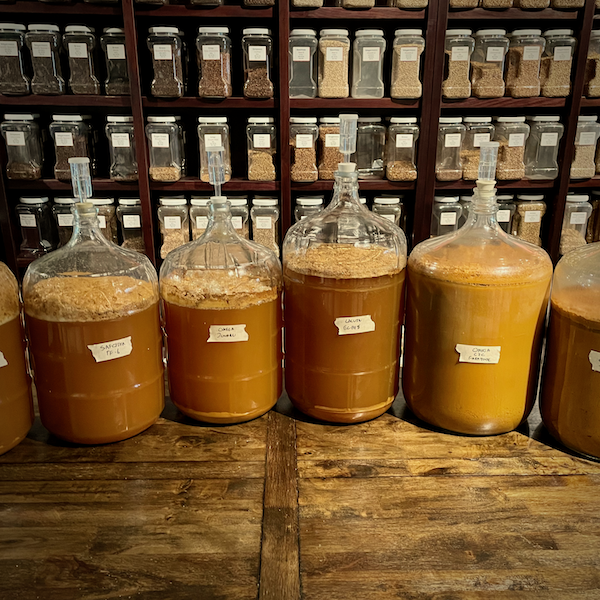
- Fill your vessel with fresh cider.
- Crush and add 1 Campden tablet per gallon of cider, stir gently, then cover. Insert your airlock and fill it with sanitizer or water. Wait 24 hours.
- Add yeast (see Choosing Yeast For Your Cider ), along with 1 gram Fermaid K per gallon. Cover the fermenter again, replace the airlock, and top it off with sanitizer or water.
- Active fermentation will usually start in about 12 to 36 hours. Ensure the airlock stays filled with fluid.
- Allow 3-4 weeks for your cider to fully ferment and for the yeast to settle.
- Using a spigot or siphon carefully to fill bottles up to a half inch from the top.
- For sparkling cider add up to 8 carb tabs per 12 oz bottle or 10 per 16 oz bottle. Cap your bottles and allow 2 weeks to fully carbonate before refrigerating and drinking.
- For still cider allow a few days in the refrigerator before drinking.
Making Cider featuring Paul Vander Heide of Vander Mill
Paul Vander Heide, founder and cidermaker of Vander Mill Cider in Grand Rapids, Michigan, discusses the basics of making hard cider. Paul covers the basics of making hard cider, discussing apples, choosing yeast, fermentation, and much more.
This video is from our September 28, 2023 hybrid live/virtual event at Gnome Brew.
Choosing Yeast For Your Cider
Cider Yeasts & White Wine Yeasts
For most ciders you should choose a cider-specific yeast or a white wine yeast. These yeasts are selected for their ability to conduct a healthy fermentation in high in fructose and other simple sugars found in cider.
White Labs WLP775 English Cider Yeast
Classic Cider Yeast. Dry But Retains Apple Flavor
SafCider AB-1
Clean & Balanced French Cider Yeast
SafCider AC-4
Apple, Floral Aromatic Profile With a Crisp Mouthfeel
SafCider AS-2
Apple Citrus Aromatic Profile With Good Overall Complexity
SafCider TF-6
Maximize the Fruitiness Of Your Cider
Lalvin 71B-1122
Produces stable fruity and floral aromas
Lalvin EC-1118
Prise de Mousse Champagne Yeast
Lalvin ICV D47
Aromatic and well-balanced
Lalvin K1-V1116
Strong fermenter for high ester production under challenging conditions
Lalvin QA23
Reveals Varietal Aromas Including Thiols and Terpenes
White Labs WLP720 Sweet Mead/Wine Yeast
Slightly Sweet and Fruity
Ale Yeasts & Brett
Ale yeasts are selected for their ability to ferment maltose, a complex sugar found in malted barley. These yeasts will ferment cider but may struggle in the presence of high levels of fructose and other simple sugars found in cider. Ale yeasts may be more likely to produce off-flavors in cider than cider-specific yeasts. If you choose to use an ale yeast, we recommend adding yeast nutrient and sulfite to your cider to ensure a healthy fermentation. We also recommend using a yeast with a high alcohol tolerance to ensure your cider ferments to completion.
Omega OYL-026 French Saison
Dry With Slight Spicy/Peppery Notes
Omega OYL-217 Coast to Coast Farmhouse Blend
Dry, Citrus, Funky. Long Fermentation Is Essential.


